Red Vinaigrette II
The dressing that split in Sauce and sear, rebuilt with the same ingredients. The diagnosis there was incomplete: shear was only half the problem. A vinaigrette is oil droplets suspended in vinegar, and building it oil-first asks the small water phase to swallow a pool of oil at once. This time everything water-friendly goes in first and the oil comes last. Findings at the bottom
A split dressing also tastes wrong, not just looks wrong. Paprika’s heat and the herb oils are fat-soluble and sit in the oil layer; the salt and acid sit below. Every spoonful is either greasy or sharp. The emulsion is what makes one bite taste like one thing
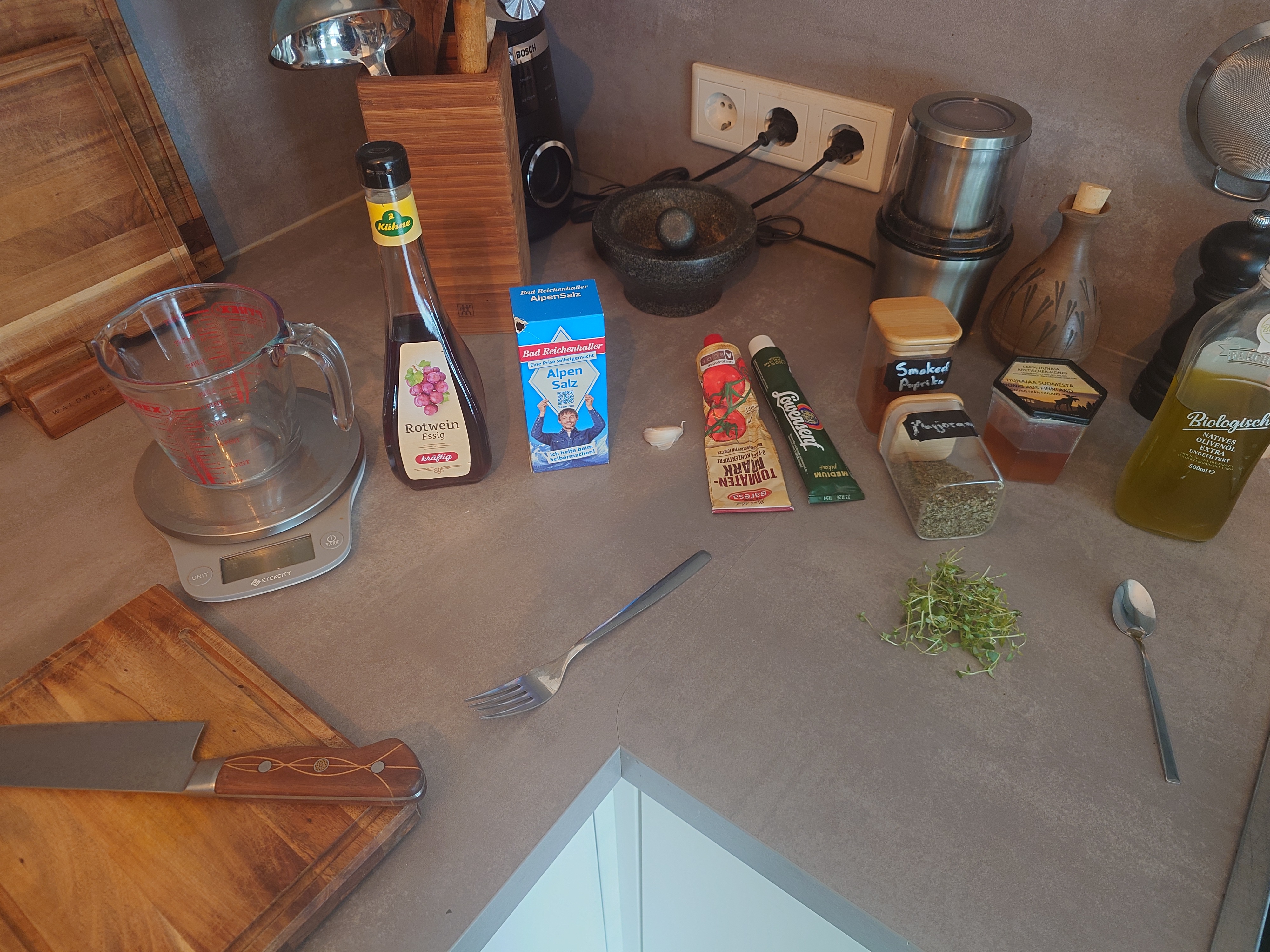
The line-up
Vinegar, salt, garlic, tomato paste, Löwensenf, smoked paprika, thyme, marjoram, honey, oil
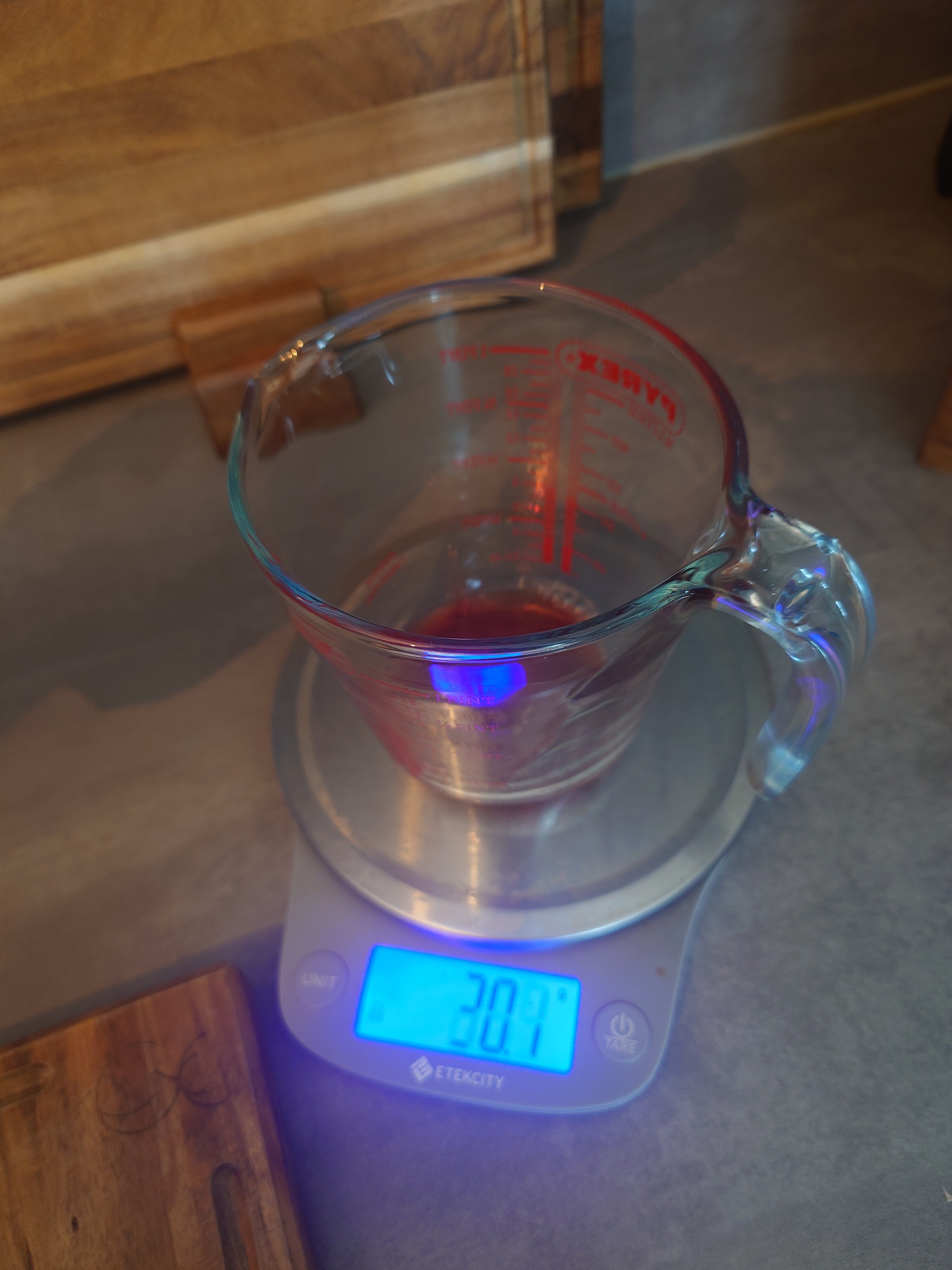
Vinegar first
The water phase is the foundation, so it goes in before anything else
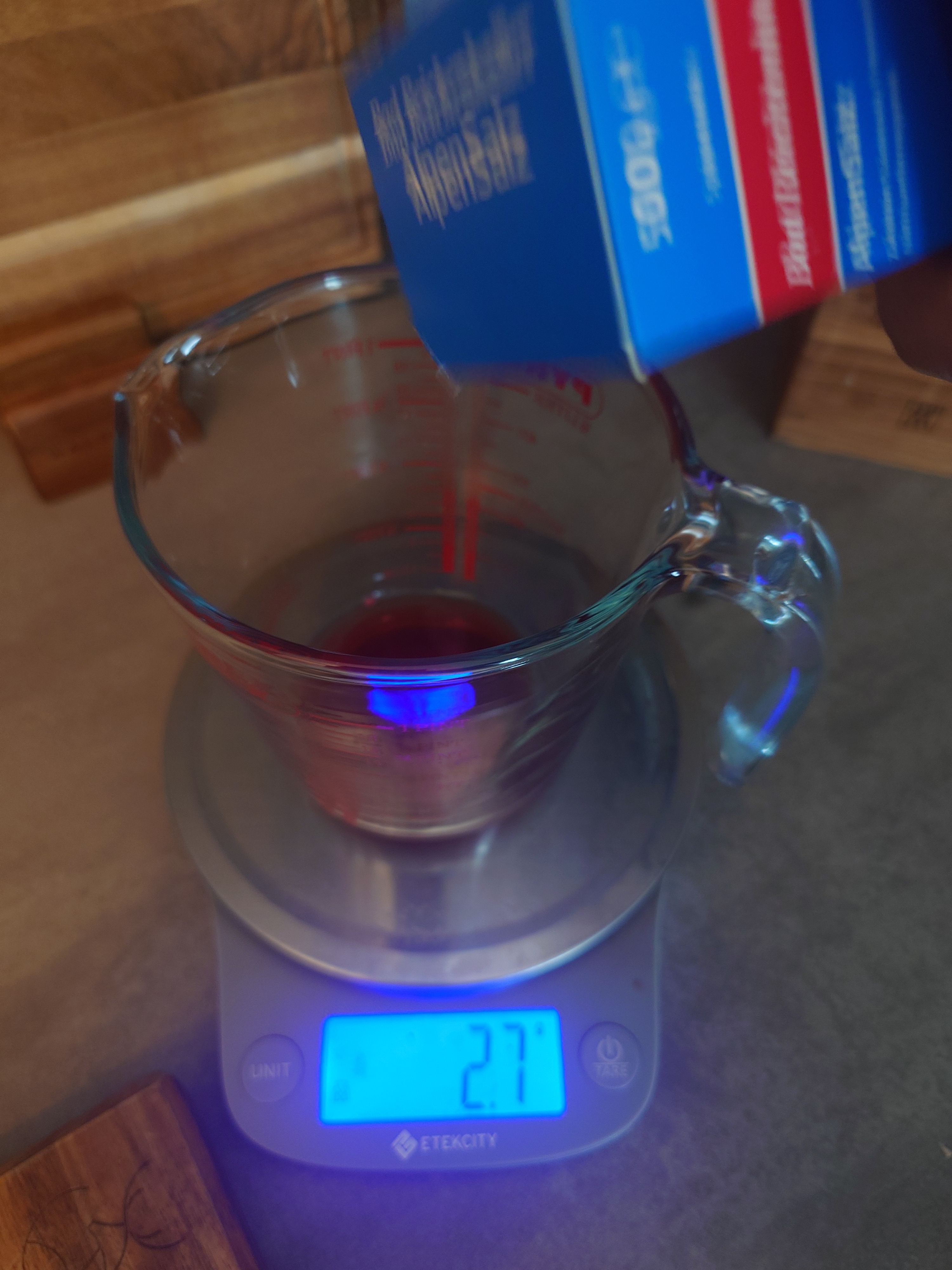
Salt, dissolved
Salt only dissolves in the water phase; in an oily cup it just sits. Into the vinegar and stirred until it is gone
Garlic into the acid
Minced fine and left to sit in the vinegar while the rest happens. Ten minutes in the acid tames the raw bite, which matters here since nothing gets cooked
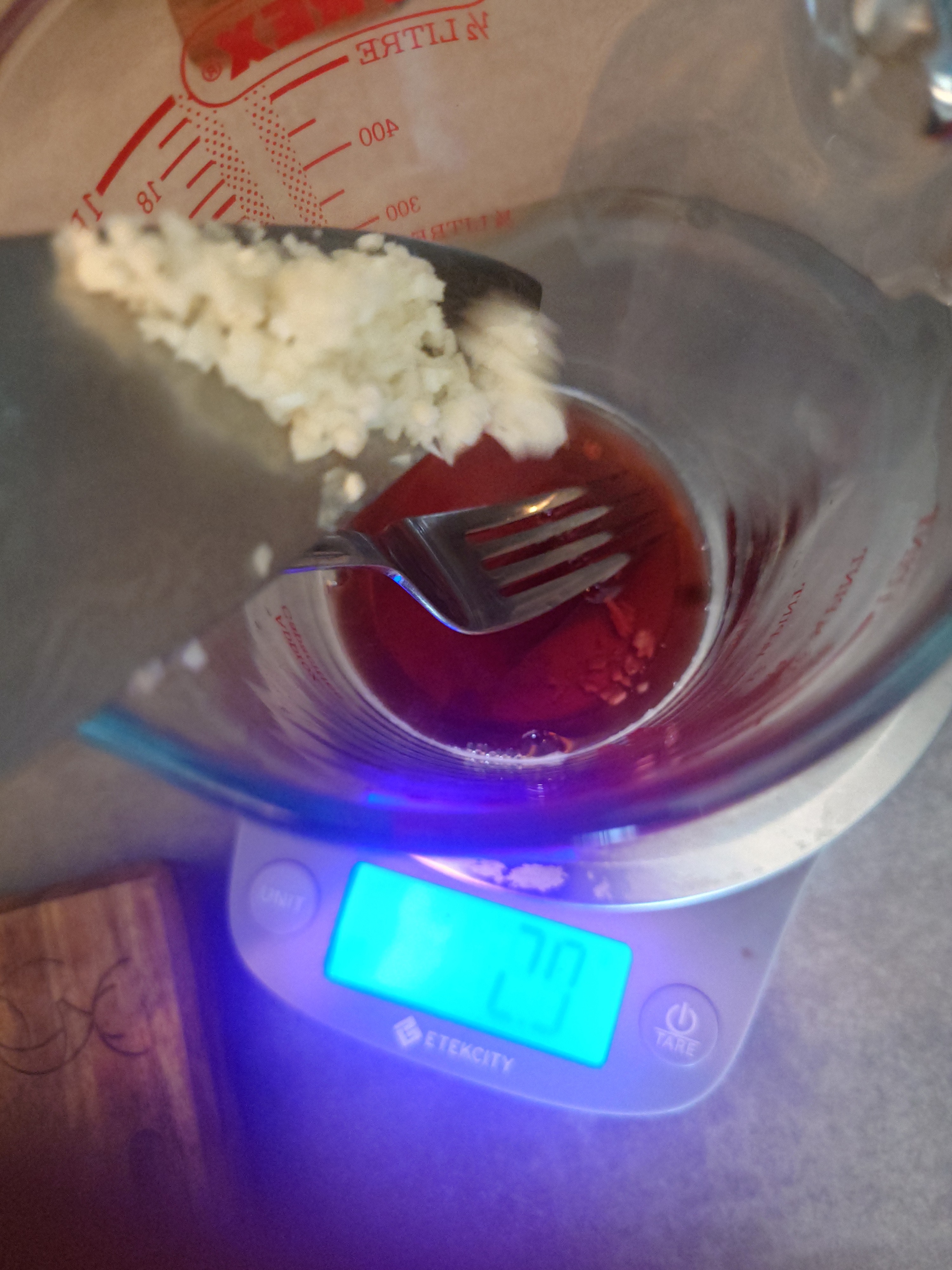
The emulsion base
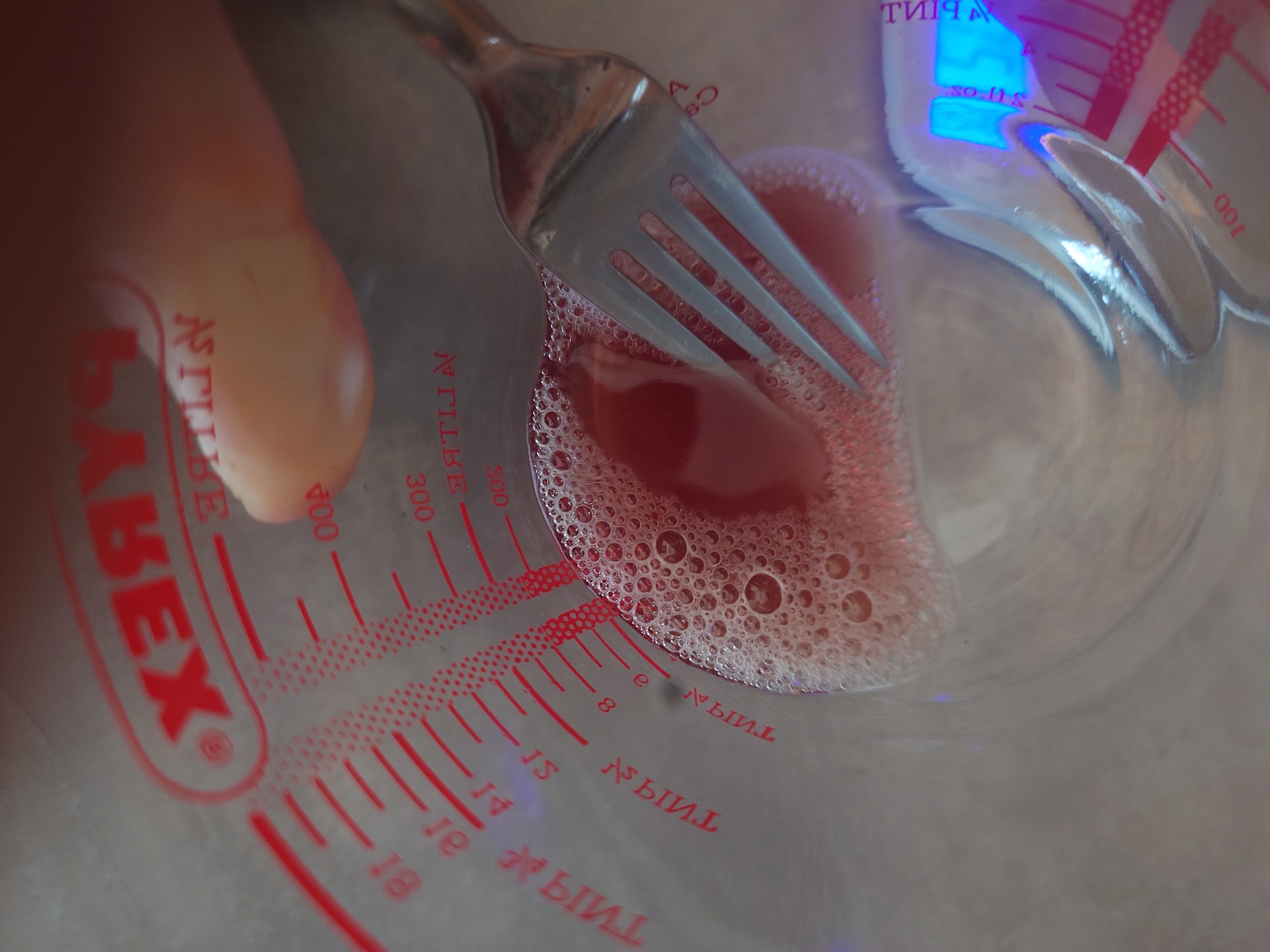
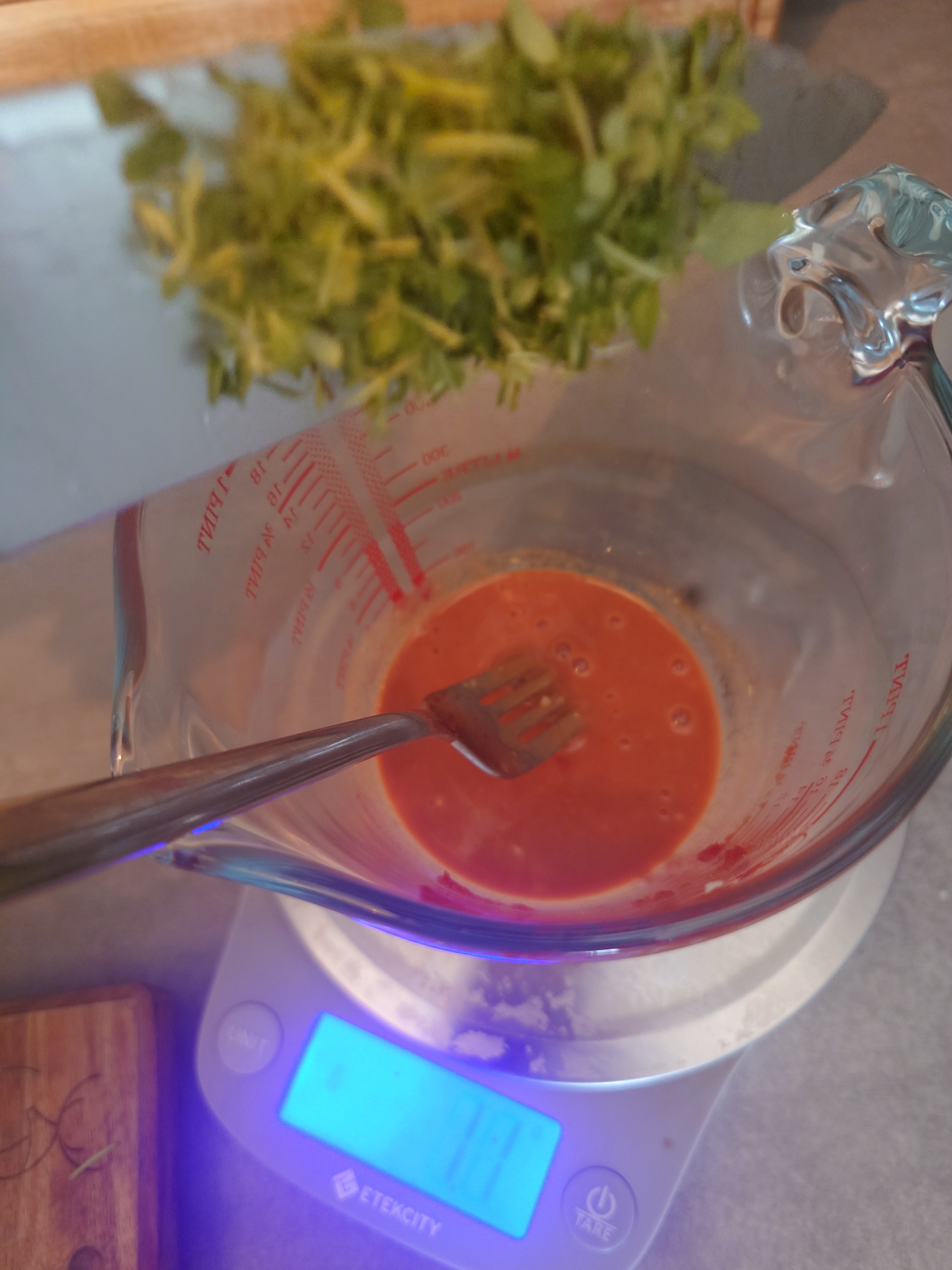
Tomato paste and Löwensenf whisked smooth into the vinegar. These two are the emulsifiers, and they belong dispersed in the water phase before any oil shows up
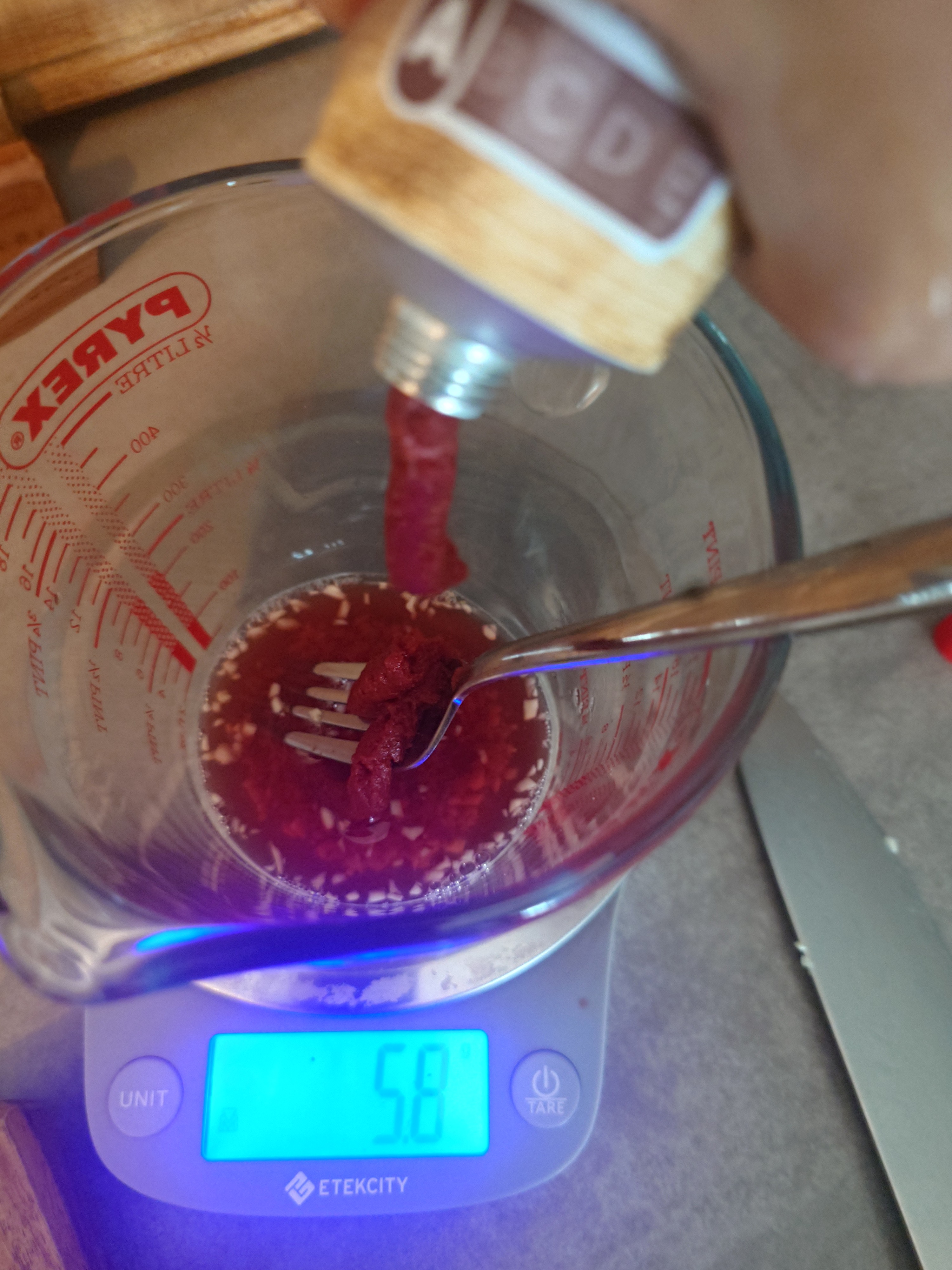
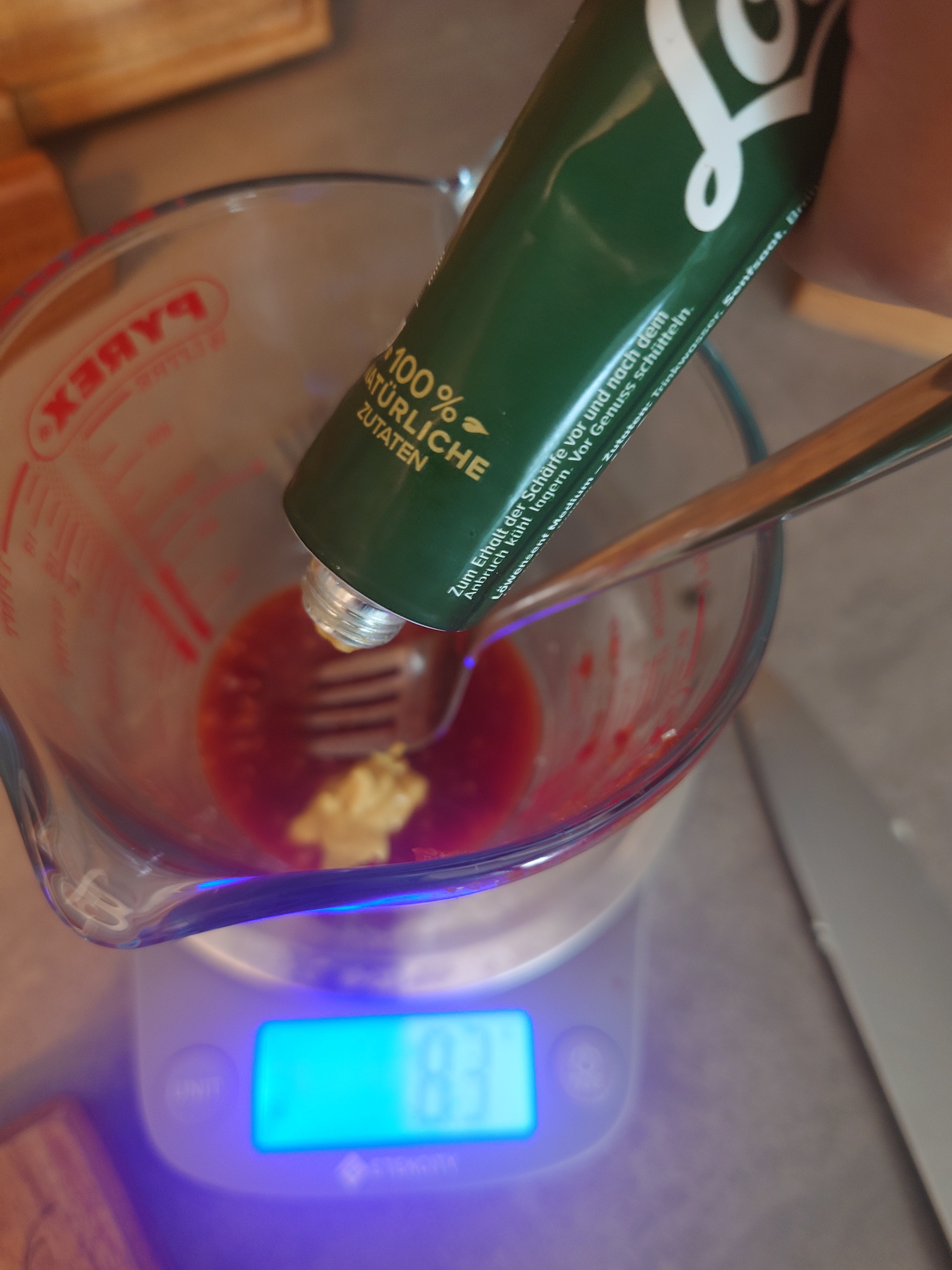
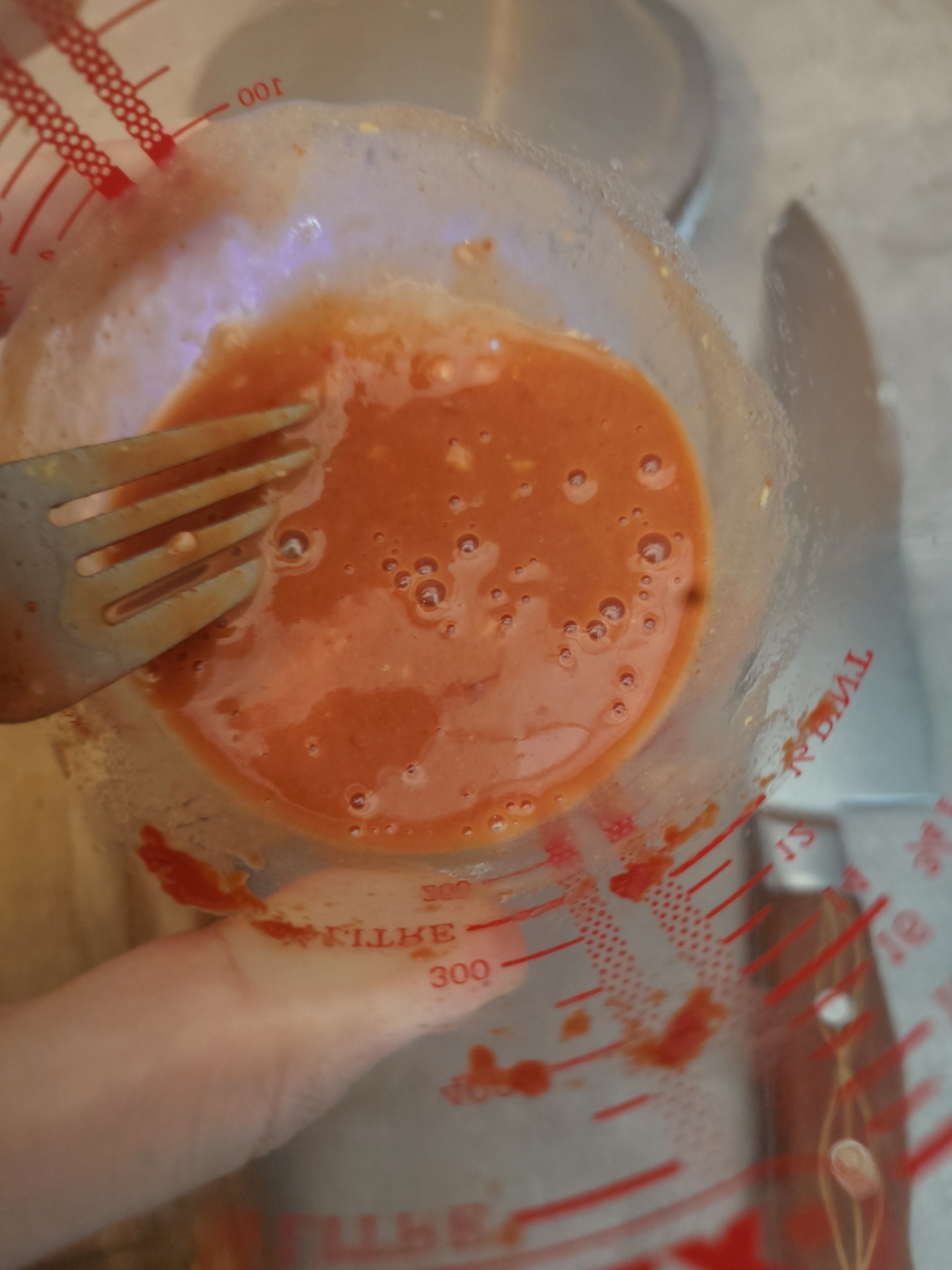
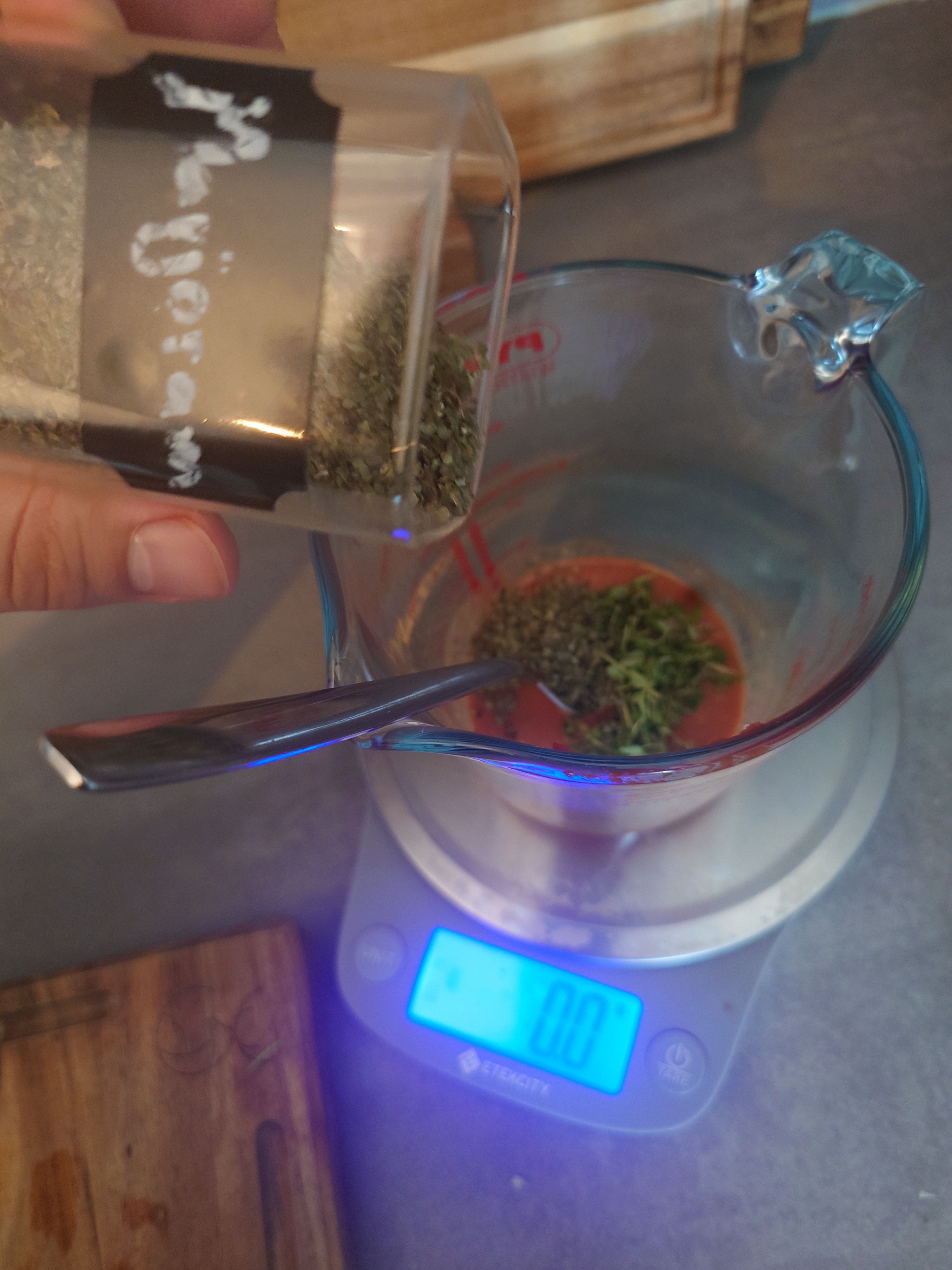
Thyme and marjoram, no oregano
The oregano is reconstructed instead of replaced: fresh thyme carries the same phenolic backbone and is already in the marinade, dried marjoram brings the sweet, floral side without the aggression. The marjoram goes in now because dried herbs only bloom in the water phase. Rosemary stays out; raw and unheated it goes medicinal fast
Paprika and honey
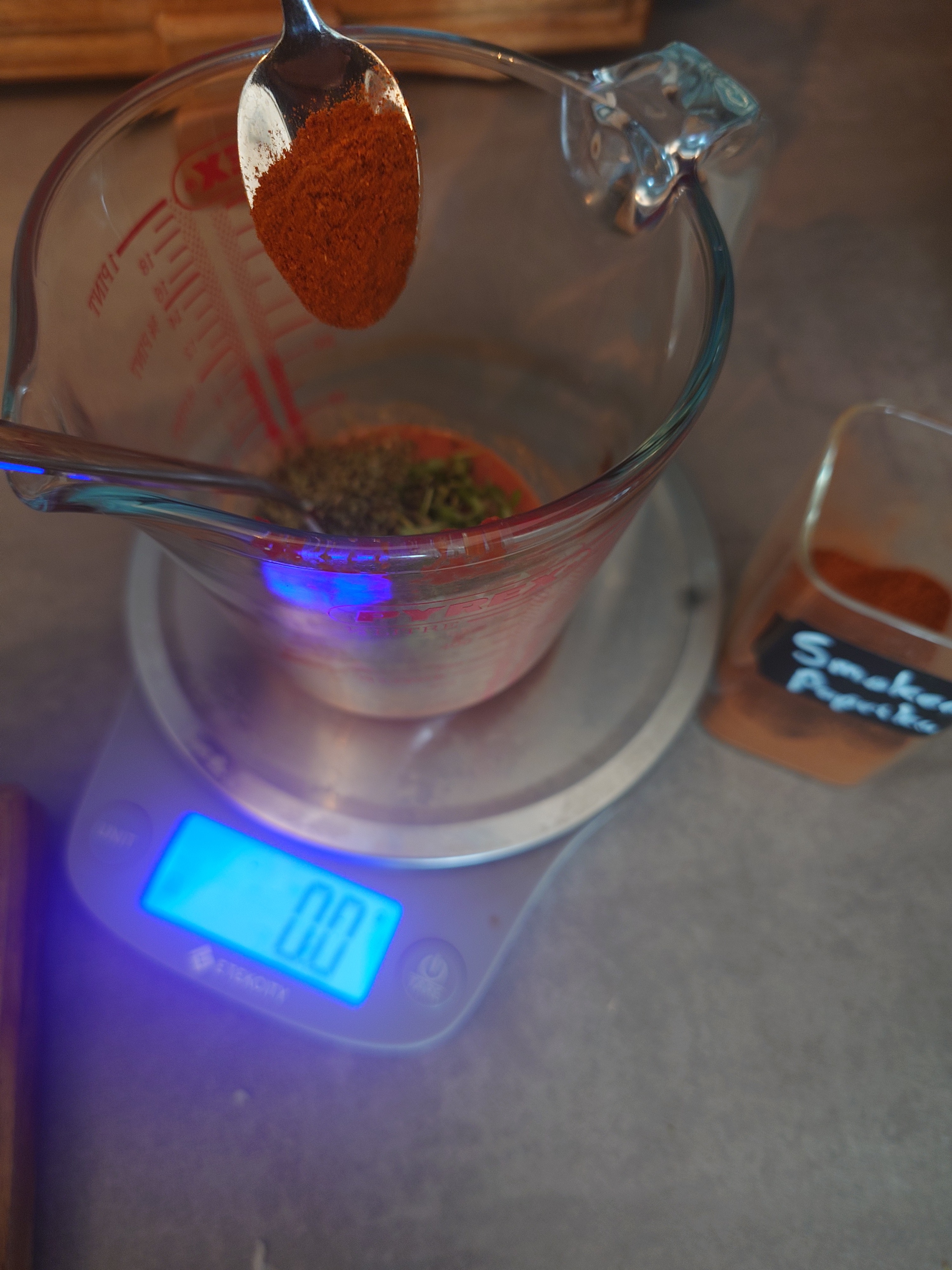
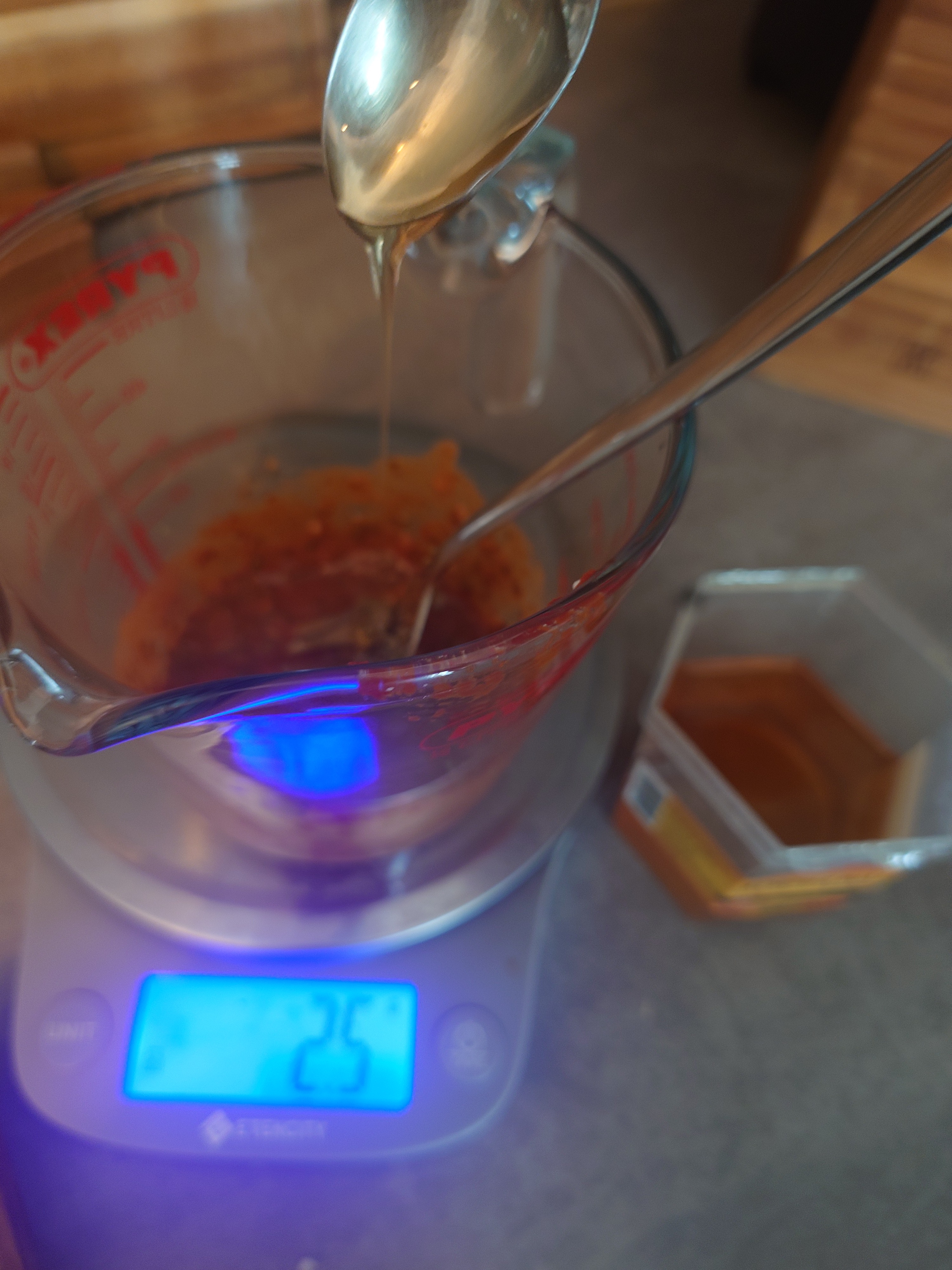
Smoked paprika as before, then 4 g of honey. It mirrors the marinade, rounds the vinegar and thickens the water phase a little
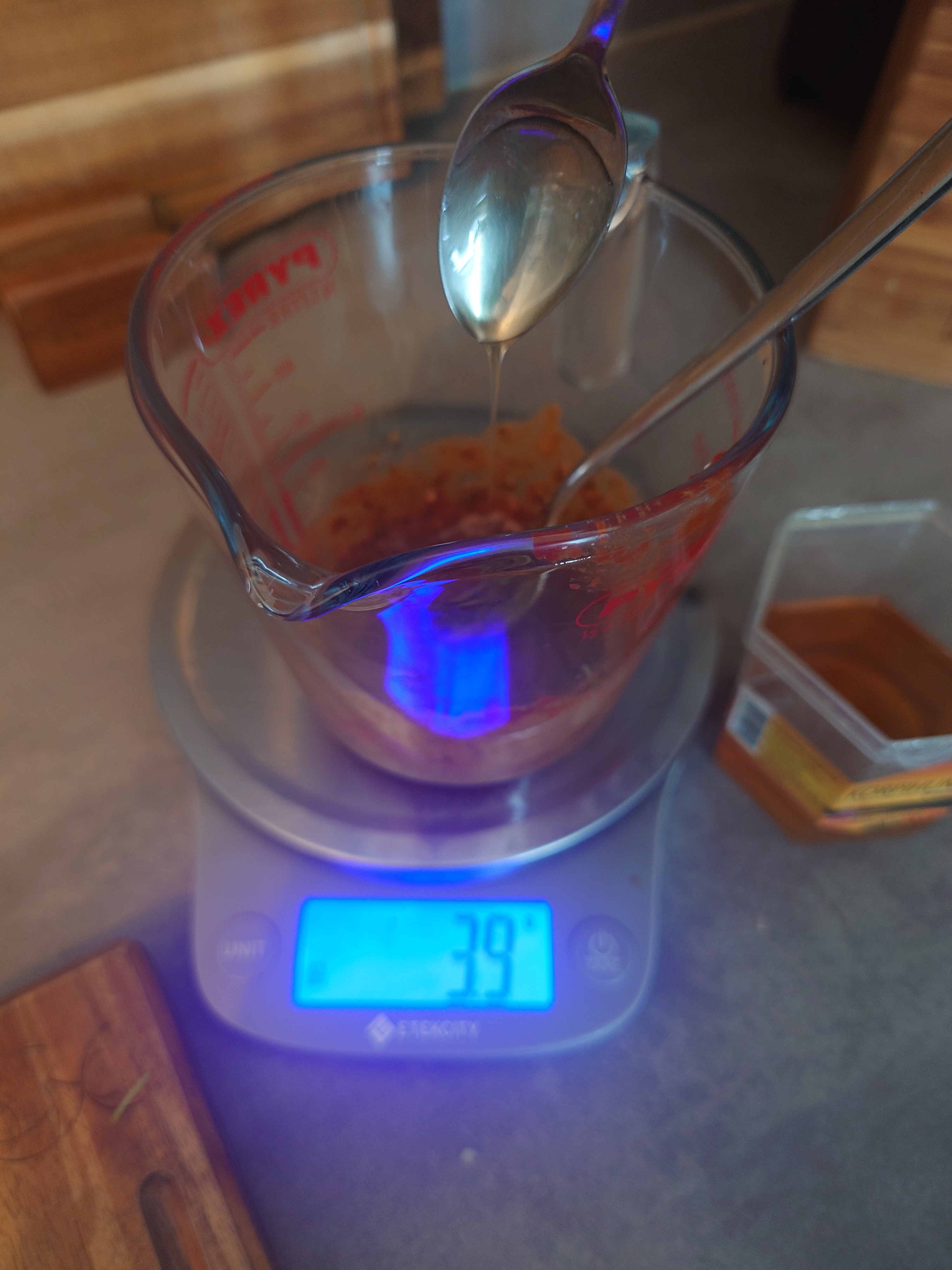
Oil last, in thirds
80 g of olive oil worked in against the base in three additions, shaken hard between each, instead of one pool for the vinegar to fight
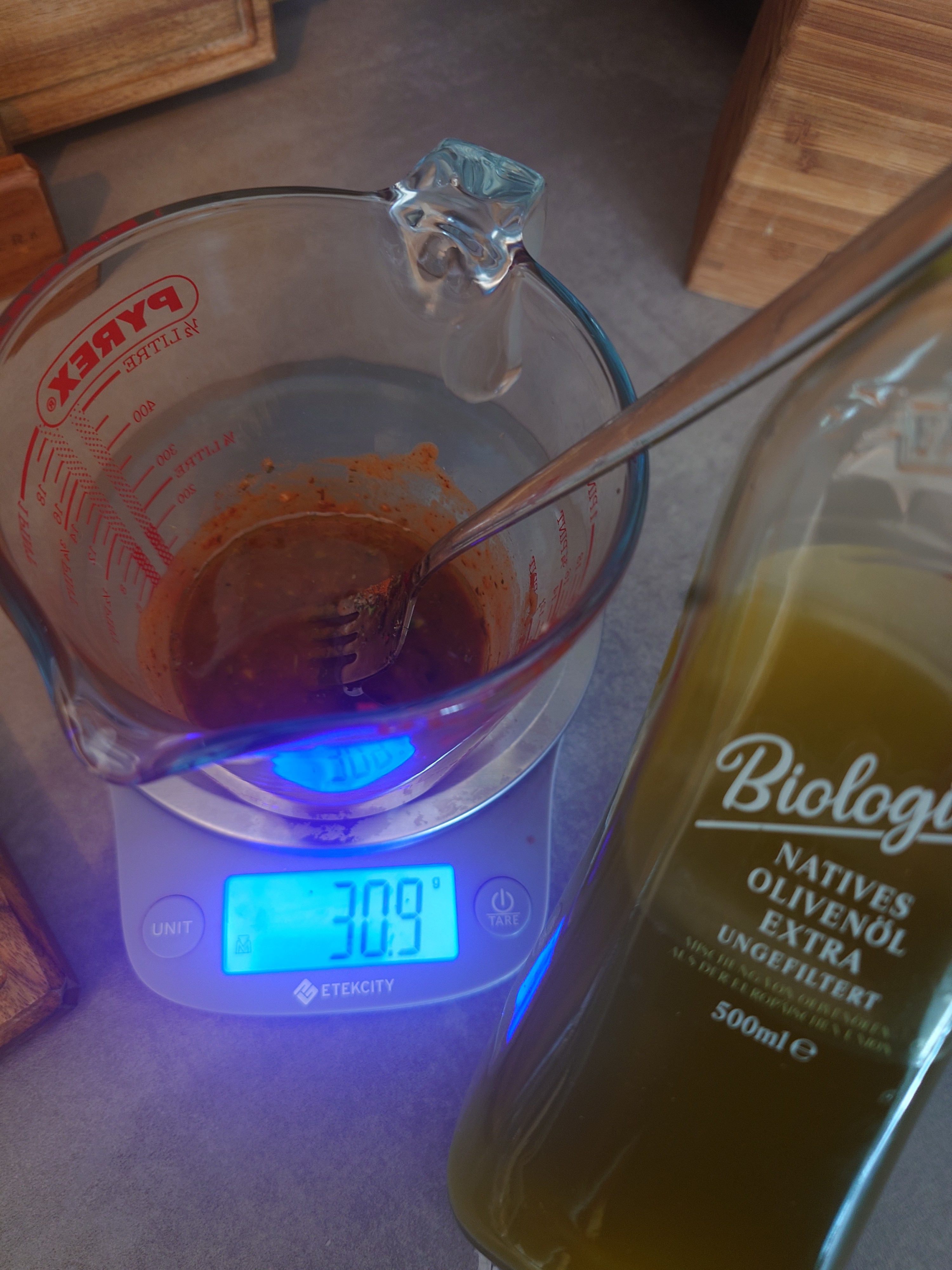
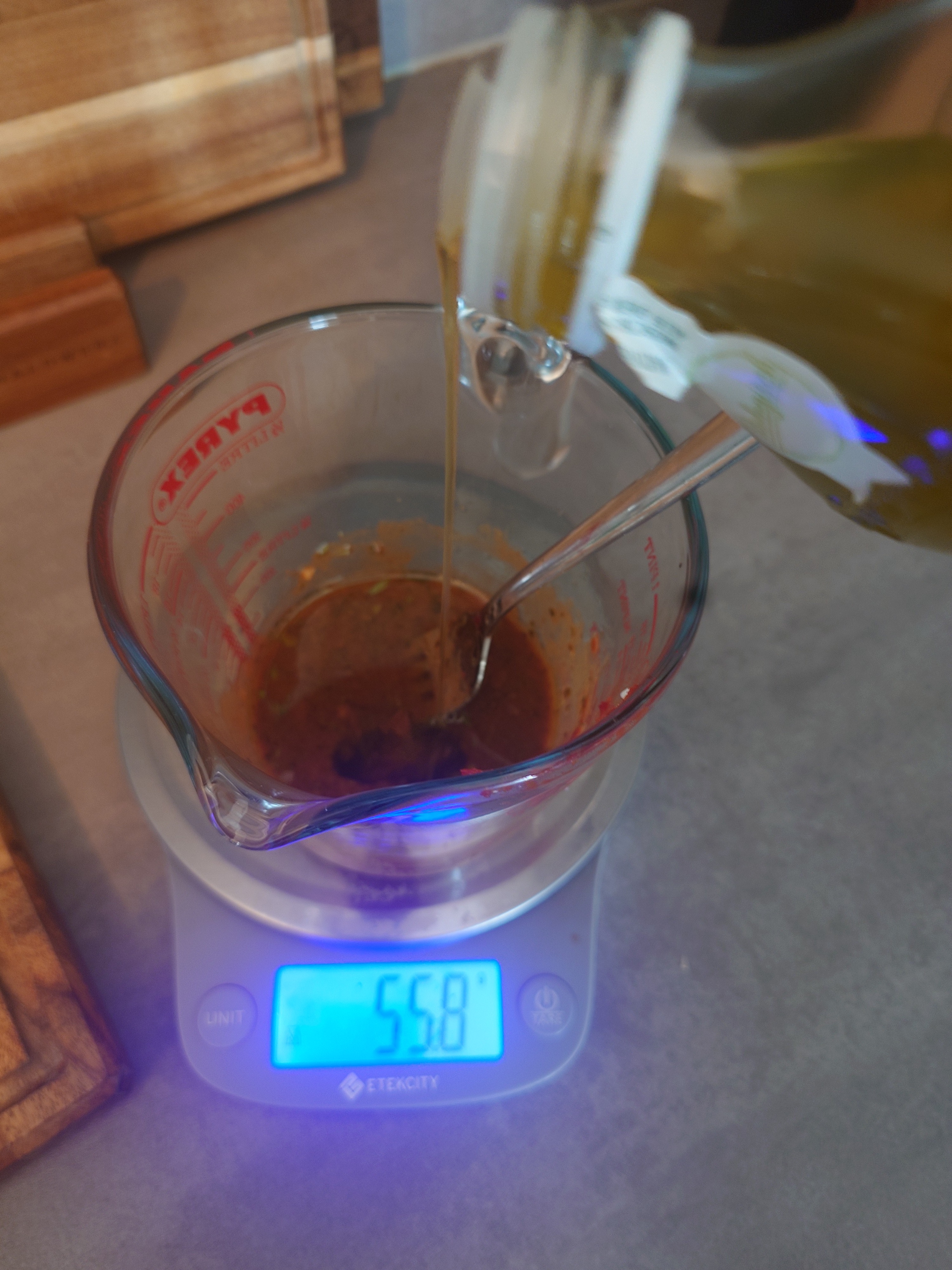
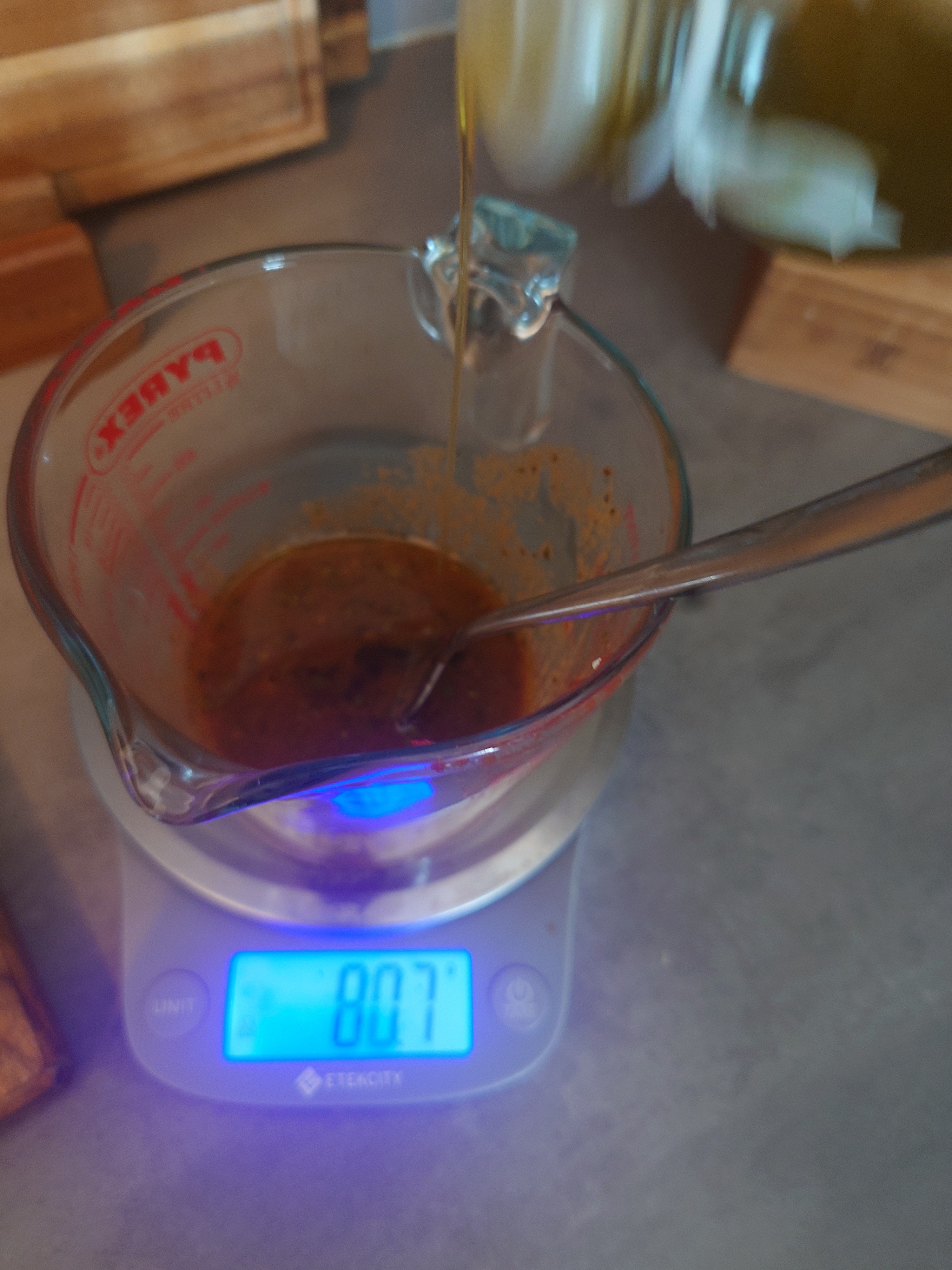
Better, not beaten
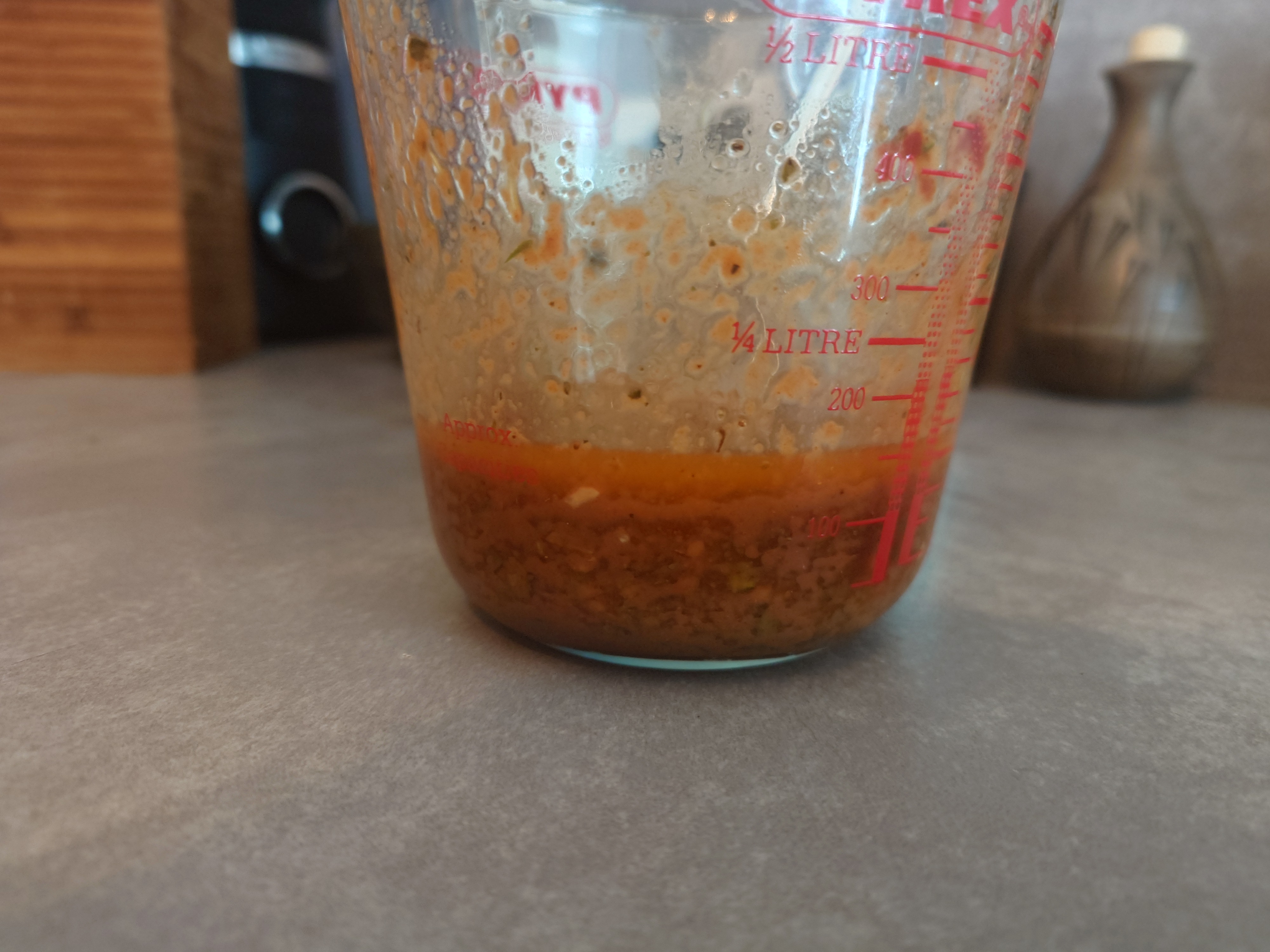
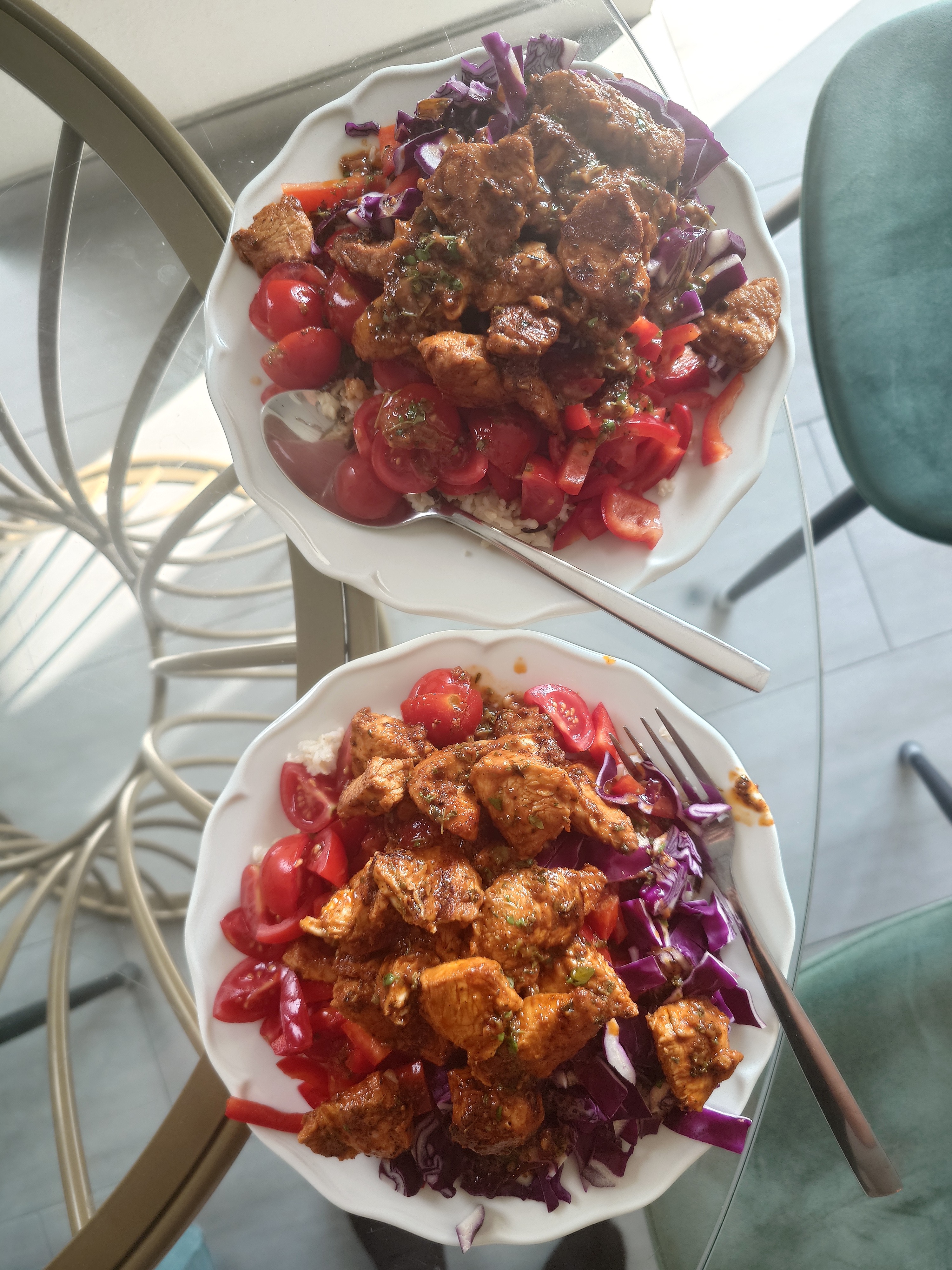
Thicker and better bound than last time, but left to stand it still settles. The cup is the remaining suspect: a sealed jar delivers far more shear than anything done in an open spout. Warm pan juices shaken in at the end are the rescue valve, since meat juices carry gelatin, a genuine emulsifier
Recipe
Red vinaigrette, in order
| Good Units | Bad Units | Item | Directions |
|---|---|---|---|
| 30 g | 1 tbsp | Red wine vinegar | Add to cup1 first |
| 3 g | Salt | Stir into the vinegar until dissolved | |
| 4 g | Garlic | Mince fine, rest in the vinegar 10 - 15 min | |
| 10 g | 1 tsp | Tomato paste | Add to cup1 |
| 10 g | 1 tsp | Löwensenf mustard | Add to cup1, whisk smooth |
| 2 g | Thyme | Strip off the stem, add whole | |
| 1 g | Marjoram, dried | Add to cup1 | |
| 2.5 g | Smoked paprika | Add to cup1 | |
| 3 - 5 g | Honey | Optional, add to cup1 | |
| 80 g | 3 tbsp | Olive oil | Add in thirds, seal and shake hard between |
| Pan juices | Warm, shake in at the end |
Commentary, extra notes
- Order matters as much as shear. Emulsifiers dispersed in the vinegar first, oil worked in against them; the reverse is what split last time
- Dissolving the salt in the vinegar worked much better than grinding it into an oily cup
- The honey earns its place
- Still settles on standing. Next run gets a sealed jar instead of the open cup
- Nothing was missing in the original: 10 g of mustard for 80 g of oil is generous, tomato paste stabilises on its own, and 2.7 to 1 oil to vinegar is the classical ratio. The build was the problem